New Data Alert: Taxes Paid
Calcbench is always striving to provide more data to our subscribers, so you can put that data to good use driving better financial analysis.
To that end, today we kick off a short series of posts on new tax payment disclosures that companies are now making: what that data is, what it tells you about corporate financial performance, and how you can find it in Calcbench.
This is the same dataset Calcbench provided to The Wall Street Journal for its March 20 story about corporate cash taxes paid.
Our tale begins in 2023, when accounting rule-makers adopted a new standard formally known as ASU 2023-09, Improvements to Income Tax Disclosures. The standard requires companies to report the actual taxes they pay to different jurisdictions around the world, so long as those individual amounts are at least 5 percent of total taxes the company pays that fiscal year.
For most companies, ASU 2023-09 went into effect with their 2025 fiscal years, which means we’re seeing these new tax disclosures for the first time ever in the annual reports arriving this spring — and yes, Calcbench has all the data, indexed and cleaned and ready for you!
Where This Data Exists
Companies will typically report this breakdown of taxes paid as part of the Income Taxes footnote they file along with their financial statements. Calcbench subscribers can find that footnote by (a) looking up a company on our Disclosures & Footnotes Query page and calling up its most recent financial filing; and then (b) selecting the Income Tax footnote from the list of choices on the left side of your screen.1
For example, we looked up IBM’s ($IBM) tax disclosures from its 2025 annual report, filed on Feb. 24. IBM’s tax footnote runs fairly long, but at the very bottom was this neat table listing taxes paid around the world in 2025:

Not every filer will have a disclosure that looks exactly like this, of course. Different companies will have operations in different parts of the world, and some might have very few jurisdiction-specific disclosures if those amounts don’t exceed 5 percent of the company’s total tax bill. But if a company is filing disaggregated tax disclosures under ASU 2023-09, Calcbench has that information ready to go.
(Most companies will also report their adoption of ASU 2023-09 in their Summary of Significant Accounting Policies footnote, also readily available on our Disclosures & Footnotes Query page; although that disclosure is usually more about a new standard’s broad implications for the company and won’t necessarily include specific, data-driven numbers.)
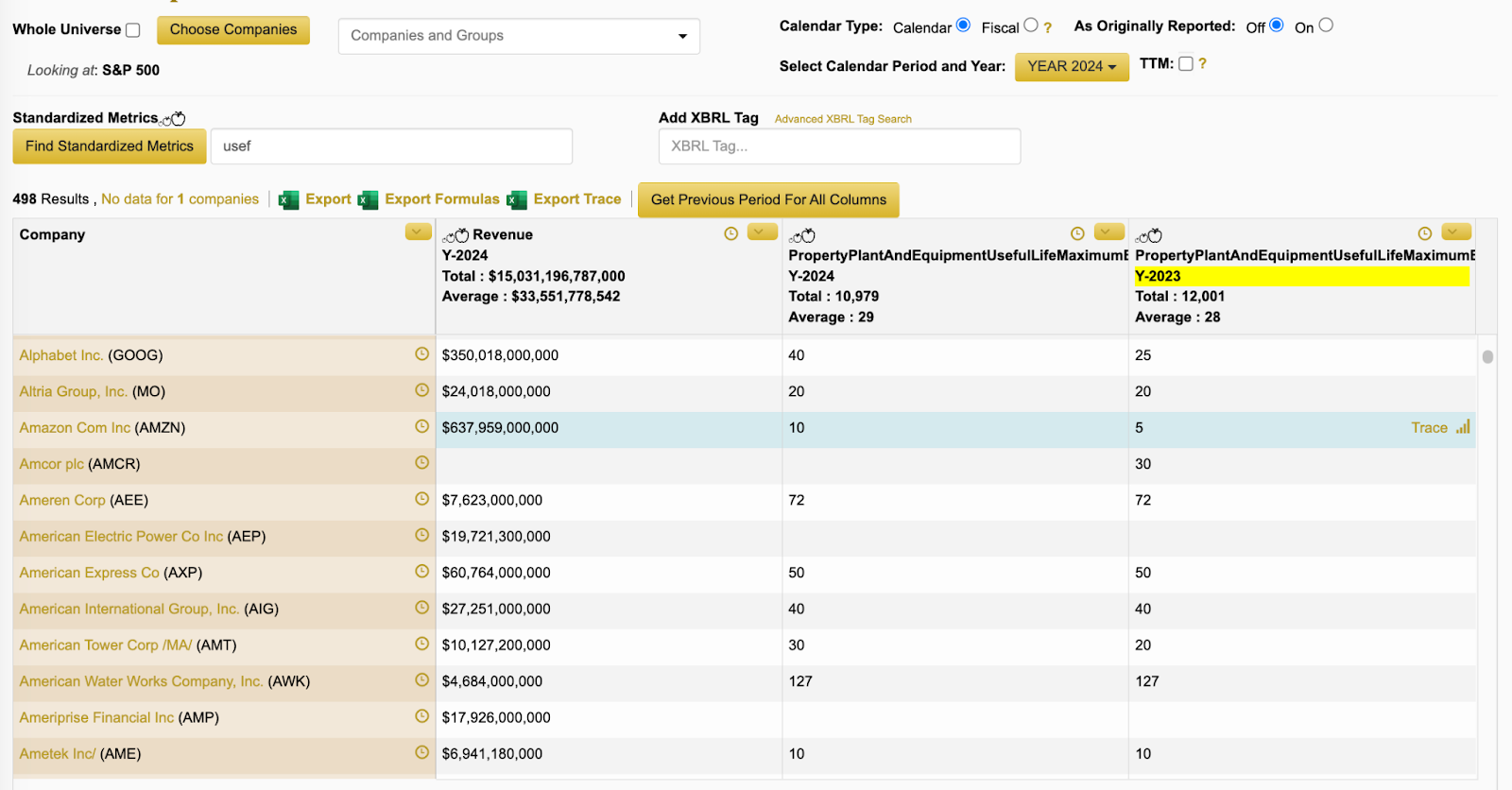
You can also find these disclosures via our Multi-Company page, for either one company or groups of companies. Just choose the companies you want to research, and then you can select any of various tax disclosures we provide in the standardized metrics field on the left side of your screen. See below.

Select the disclosure you want, and it appears on your screen! That’s all there is to it.
What the Data Tells You
Historically, most readers of financial statements are used to seeing tax data in the income statement, where it appears as an accrued expense charged against revenue — but thanks to the legendarily complicated U.S. tax code, the tax expense a company reports for a fiscal year isn’t always the same amount as the actual taxes paid in that fiscal year. (Sometimes adjustments between tax expense and actual taxes paid will be reported as “deferred income taxes” in the statement of cash flows as part of operating activities.)
ASU 2023-09 drills into those actual taxes paid by a company. Moreover, a company doesn’t just report the dollar amount of taxes paid. It must also report where it paid those taxes, by country and by federal, state, and local level — which provides financial analysts with a wealth of new information.
The standard also requires companies to disclose a “rate reconciliation” every year regardless of materiality in the following categories:
State and local income tax
Net of federal income tax effect
Foreign tax effects
Effect of changes in tax laws or rates enacted in the current period
Effect of cross-border tax laws
Tax credits
Changes in valuation allowances
Nontaxable or nondeductible items
Changes in unrecognized tax benefits
What does all that look like in practice? Again, let’s look at IBM’s disclosure.

Altogether, these disclosures can help financial analysts uncover all sorts of interesting insights. For example, you can see which countries are collecting significant tax revenue from U.S. filers, or which individual U.S. filers are contributing the most to specific countries’ tax revenue. You can also see how much money foreign businesses, listed on U.S. exchanges, are paying in taxes here (since those amounts would qualify as “foreign” taxes for those non-U.S. domiciled businesses).
Calcbench will offer more examples in future posts of how to put all this information to work. For now, just know that fresh data is available and Calcbench has it ready for you!
1 There are some firms that provide this data in Supplemental Cash Flow disclosures.
Comments
Post a Comment